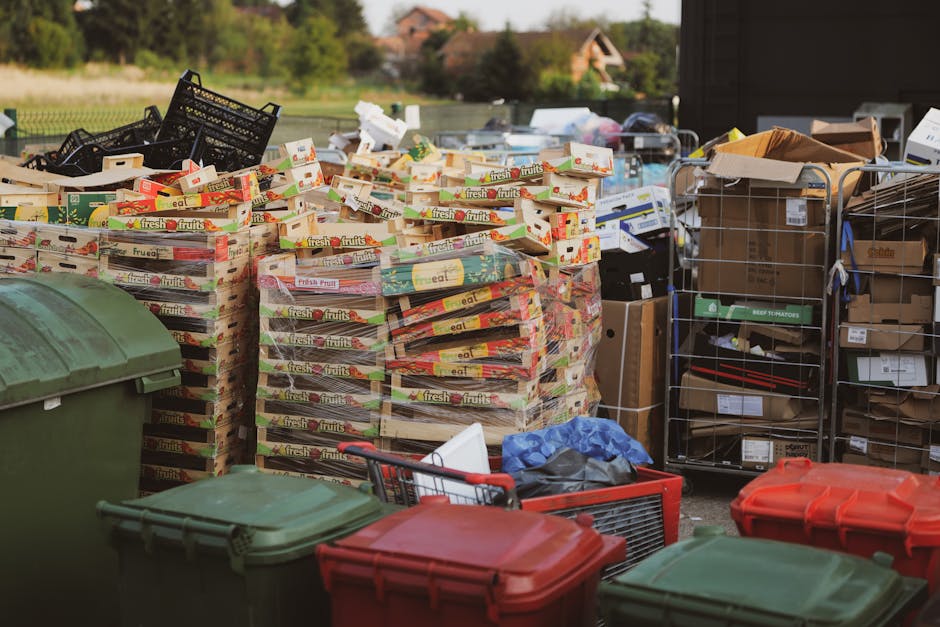
5 Rubbish Disposal Mistakes That Could Cost You
Rubbish disposal sounds simple enough until it suddenly isn't. A missed council rule, an overloaded skip, or the wrong item in the wrong load can lead to extra charges, delays, or a proper headache you did not need. This guide on 5 Rubbish Disposal Mistakes That Could Cost You breaks down the common slip-ups people make, why they matter, and how to avoid them in a way that saves time, money, and stress.
Whether you are clearing a house, dealing with builders' waste, emptying a garage, or sorting out an office move, the same basics apply: know what you have, know where it can go, and do not assume "it'll be fine" is a strategy. Let's face it, rubbish has a way of becoming more expensive when it is left to the last minute.
Table of Contents
- Why These Mistakes Matter
- How Rubbish Disposal Usually Works
- Key Benefits of Doing It Properly
- Who This Advice Is For
- Step-by-Step Guidance
- Expert Tips for Better Results
- Common Mistakes to Avoid
- Tools, Resources and Recommendations
- Law, Compliance and Best Practice
- Options and Comparison Table
- Case Study Example
- Practical Checklist
- Conclusion
- Frequently Asked Questions
Why 5 Rubbish Disposal Mistakes That Could Cost You Matters
The five biggest rubbish disposal mistakes usually look small at the beginning. A few bags placed out too early. A mixed load with one awkward item. A booking made without checking access. A garden waste pile that turns out to include treated timber. Tiny things, but they can trigger extra collection fees, rejected loads, wasted labour, or even enforcement issues if waste is handled badly.
This matters because rubbish is rarely just "rubbish". It often includes different waste streams: general household waste, bulky furniture, green waste, builders' rubble, packaging, electrical items, and sometimes hazardous bits you need to treat with more care. If you do not separate or describe the waste properly, you can end up paying for the mistake twice. First in the original service, then in the fix.
In our experience, the people who get caught out are rarely careless in a dramatic way. They are simply busy. A loft clearance gets rushed. A flat clearance includes a few items that should have been flagged earlier. An office move happens on a deadline, and suddenly someone is making decisions with no space left to think. It happens.
That is why the cost of rubbish disposal is not only about money. It is also about time, compliance, safety, and peace of mind. If you are clearing a property, you want the job finished cleanly, not reopened because something was missed the first time around.
How 5 Rubbish Disposal Mistakes That Could Cost You Works
The basic process is simple: identify the waste, decide how it should be handled, choose a disposal route, and make sure everything is collected or taken away correctly. The mistake usually happens in one of those steps. People guess rather than check.
For example, a lot of household clearances seem straightforward until the pile includes broken furniture, old paint tins, garden clippings, and a mattress. Those items do not always belong in the same system. A good rubbish removal plan separates bulky waste from reusable items, recyclable materials, and anything that needs specialist handling.
If you are using a professional collection service, they will usually ask questions about access, volume, item type, and where the waste is located. That is not fussiness for the sake of it. It helps avoid wasted trips and unexpected surcharges. If you are doing it yourself, the same logic applies in a more DIY sort of way: measure, sort, label, and plan the route before you start lifting.
A lot of people also forget that disposal is not only about removal. It is about where the waste ends up after it leaves your property. Responsible providers focus on sorting, recycling where possible, and handling non-recyclable waste appropriately. That is one reason a service like recycling and sustainability can matter just as much as speed.
Key Benefits and Practical Advantages
Getting rubbish disposal right has a few very practical benefits. Some are obvious, some less so.
- Lower costs: You avoid re-collection fees, wasted hire time, and charges for incorrect loads.
- Fewer delays: A clean plan keeps the job moving without awkward pauses or last-minute changes.
- Better safety: Sharp objects, heavy items, and awkward materials are less likely to cause injury when sorted properly.
- Less stress: You are not guessing what happens next, which is always a relief when the room is already half-empty.
- More recycling potential: Good sorting increases the chance that reusable or recyclable waste is handled correctly.
There is also a quieter benefit: you look and feel more organised. If you have ever stood in a garage on a cold morning, staring at a stack of mystery items and thinking, "Right, where do I even start?", you will know exactly what I mean. A decent disposal plan turns that mess into a process.
For bigger clear-outs, planning can also help you choose the right service. A house clearance is not the same as a quick furniture disposal job, and builders' waste has different practical demands from garden waste. Matching the method to the waste is where the savings often show up.
Who This Is For and When It Makes Sense
This advice is for anyone who is about to throw, move, load, or clear a meaningful amount of waste. That includes homeowners, landlords, tenants, tradespeople, office managers, and people helping family members with a property clear-out.
It is especially useful if you are dealing with:
- a house move or bereavement clearance
- a loft, garage, or home declutter
- leftover builders' rubble and site waste
- bulky furniture that will not fit in the car, obviously
- garden waste after a big tidy-up
- office furniture, filing, and mixed commercial waste
If you are clearing a flat or dealing with limited access, the margin for error gets smaller. Narrow stairwells, shared hallways, parking restrictions, and lift access can all affect the cost. In those cases, a service such as flat clearance or home clearance may be more practical than trying to manage everything yourself.
Truth be told, the moment you have more than a few bags, or one awkward bulky item, it is worth pausing and checking the plan. That one pause can save a lot of hassle later.
Step-by-Step Guidance
Here is a practical way to avoid the costly mistakes before they happen.
- Sort the waste into clear groups. Separate general waste, bulky items, recyclables, green waste, builders' waste, and anything that looks unusual or potentially hazardous.
- Check what cannot go with the rest. Paint, chemicals, electricals, plasterboard, batteries, gas cylinders, and some mattresses or white goods may need special handling. If you are unsure, do not lump them in and hope for the best.
- Estimate the volume honestly. Overestimating can waste money. Underestimating can mean extra collections or a failed pickup. Neither is ideal.
- Think about access. Can a van park nearby? Is there a narrow gate, steps, or no lift? A simple access issue can turn a standard job into a more expensive one.
- Choose the right disposal route. For example, old furniture may suit furniture disposal, while a bigger mixed clear-out may need broader waste removal.
- Ask what happens after collection. Good providers should be able to explain sorting, recycling, and disposal in plain English.
- Keep records if it is a business or property job. Note what was removed, when it was collected, and who handled it. That is just good housekeeping, really.
If the job involves outdoor waste, think in terms of weather and timing too. A garden pile left through a rainy week becomes heavier, messier, and harder to manage. A Friday afternoon plan can look very different by Monday morning.
For larger or more specialised clearances, you may want to review service-specific options such as builders' waste clearance, garden clearance, garage clearance, loft clearance, or office clearance.
Expert Tips for Better Results
A few small habits make a very big difference.
1. Photograph the waste before booking. This helps when you are asking for a quote and reduces confusion later. A quick photo in daylight is often enough.
2. Separate reusable items early. If something could be donated, sold, or reused, set it aside. Once it is mixed into a general waste pile, it rarely gets a second chance.
3. Watch for hidden weight. Mixed waste can be much heavier than it looks, especially when it includes soil, broken masonry, wet cardboard, or damp wood.
4. Keep pathways clear. This sounds basic, but cluttered access slows everything down. One box in the wrong place can turn a quick job into a shuffle.
5. Ask direct questions. If you want to know whether a material can be taken, ask before collection day. Better one slightly awkward question than a rejected load at the kerb.
6. Use the right service for the right job. A full property clear-out is different from disposing of one sofa or a set of office chairs. If you only need certain items removed, a more targeted option such as furniture clearance may make more sense.
One small aside: people often spend longer choosing the cheapest disposal option than they do sorting the waste itself. Funny, really. But it is usually the sort of penny-pinching that costs more in the end.
Common Mistakes to Avoid
Here are the five rubbish disposal mistakes most likely to hit your wallet or waste your day.
1. Mixing different waste types together
This is the classic mistake. General waste, recyclable materials, and specialist items get thrown together because it feels faster. Then the collection is priced on the messiest part of the load, or some of it cannot be handled as planned. A mixed load is often more expensive because it needs more sorting.
2. Guessing the amount of waste
People are notoriously bad at estimating volume. A pile that looks like "a few bits" can fill a van. A van that looks half-full can contain far more weight than expected. If you are not sure, ask for help or break the job into sections.
3. Ignoring access problems
Steep stairs, no parking, shared entrances, tight corners, and long carries all affect the job. A clearance team can work around a lot, but not for free. Access is one of those things people only remember after the quote changes. Annoying, yes, but avoidable.
4. Leaving out restricted or hazardous items
Paint, solvents, batteries, and some electrical items should not be slipped into a general load without checking. It can create safety issues and may lead to refusal or extra cost. If in doubt, flag the item clearly before collection.
5. Booking in a rush without comparing the job properly
Speed matters, but not if it means booking the wrong service. A small furniture job is not the same as a full house clearance. If you choose the wrong option, you may pay for a second visit or for extra time on the day.
A useful rule: if the waste feels "mixed, bulky, or awkward", slow down and plan it properly. That is where the savings tend to be.
Tools, Resources and Recommendations
You do not need specialist equipment to avoid most disposal mistakes, but a few simple tools help a lot.
- Bin bags and heavy-duty sacks: useful for separating smaller waste streams.
- Labels or marker pens: helpful for marking items that should stay together.
- Measuring tape: useful if you are checking whether bulky items fit through doors or into a van.
- Phone camera: take clear pictures before you book a service or start loading.
- Gloves and sturdy footwear: basic but important if you are lifting or moving anything sharp or dirty.
On the planning side, it is worth looking at pages that explain service scope and expectations, including pricing and quotes, payment and security, and insurance and safety. These are the sorts of practical details people often skip until the last minute, then wish they had not.
If sustainability matters to you, a disposal provider's approach to sorting and reuse is worth checking too. It is not only about being "green" in a vague sense; it can also influence cost and efficiency.
Law, Compliance, Standards, or Best Practice
Rubbish disposal in the UK sits within a framework of duty of care, safe handling, and responsible transfer. You do not need to become a legal expert to stay on the right side of things, but you do need to avoid careless disposal. In plain terms: make sure waste goes to the right place, through the right process, and with a clear understanding of what it is.
For households, the main risk is usually inconvenience or extra charges. For businesses, landlords, and tradespeople, the risks can be bigger because waste handling records, segregation, and responsible transfer matter more. If you are running a business clear-out, a service like business waste removal can help reduce the chance of non-compliant handling or poor documentation.
Best practice is straightforward:
- describe the waste accurately
- separate items where possible
- avoid mixing unknown materials
- use properly equipped and insured providers
- keep records when the job is commercial or repeated
If you are ever unsure about a specific item, it is safer to ask than to assume. That sounds obvious, but it is the little obvious things that save people most often.
Options, Methods, or Comparison Table
Different disposal methods suit different jobs. Picking the wrong one is one of the fastest ways to overspend. Here is a simple comparison.
| Method | Best for | Typical strengths | Main drawback |
|---|---|---|---|
| DIY trips to the tip | Small, sorted loads | Cheap if you already have transport | Time-consuming, physical effort, limited capacity |
| Skip hire | Ongoing projects and heavy waste | Good for repeated filling over time | Space required, permit or placement issues may arise |
| Man-and-van style clearance | Bulky, mixed, one-off clear-outs | Convenient and quick | Pricing depends heavily on access and waste type |
| Specialist clearance service | Homes, flats, offices, garages, gardens, builders' waste | Tailored handling and less hassle | Needs accurate description to quote properly |
For example, if you are emptying a cluttered loft, a tailored loft clearance service may be better than making three exhausted trips in your own car. If it is a large property or an emotionally difficult move, a house clearance or home clearance may simply reduce pressure in a way that is hard to put a price on.
Case Study or Real-World Example
Here is a realistic example based on a common situation.
A family clears a garage before winter. At first glance it looks like a simple job: some old shelving, a broken bike, a few paint tins, two damp boxes, and a pile of garden cuttings from the back path. They assume one collection will do it. On the day, the team finds mixed materials, unknown liquids in a tin, and far more volume than expected because the wet waste weighs much more than it looked.
What happens next? The job takes longer, the price changes, and part of the waste needs to be separated before it can be removed. Nothing dramatic, but enough to be irritating. A bit of prep would have fixed most of it. One photo. A quick sort. A check on the paint tins. That is all.
Now compare that with a better approach: the family sorts the garage into clearly labelled piles, removes the reusable bike for donation, separates the garden waste, and flags the tins beforehand. The collection is smoother, the quote is clearer, and the whole thing feels oddly manageable. Not glamorous, but very effective.
That is the pattern you see again and again. The waste does not become easier. The planning does.
Practical Checklist
Use this before booking or loading anything.
- Have I sorted waste into clear categories?
- Do I know if any item needs special handling?
- Have I measured or photographed the load?
- Is access clear for collection or loading?
- Have I checked whether any items can be reused or recycled?
- Do I understand the likely pricing basis?
- Have I chosen the right service for the type of waste?
- Do I need records for a business or landlord job?
- Have I protected floors, walls, and pathways if moving items myself?
- Have I confirmed the collection time and any parking restrictions?
Quick takeaway: if a disposal job feels rushed, it usually is. Pause for five minutes, sort properly, and you will probably save yourself a much longer mess later.
Conclusion
The real lesson from these 5 rubbish disposal mistakes is simple: most costly problems come from guesswork, not the waste itself. When you sort items properly, check access, choose the right disposal route, and ask sensible questions before the job starts, you remove most of the risk at the source.
That applies whether you are clearing a one-bedroom flat, tidying a garage that has become a bit of a creature of its own, or arranging a full property clear-out. The goal is not perfection. It is avoiding the expensive, annoying, time-wasting bits.
If you need support with a bulky, mixed, or time-sensitive job, it helps to work with a team that understands the practical side of clearance and the small details that make all the difference. And if you are planning ahead, a quick review of about us can also give you a better sense of how the service is run.
Get a free quote today and see how much you can save.
Do it once, do it properly, and the whole thing gets a lot lighter. That's usually the best kind of win.
Frequently Asked Questions
What are the most expensive rubbish disposal mistakes?
The most expensive mistakes are usually mixing the wrong waste types, underestimating volume, and failing to check access or special-item restrictions. Those issues often lead to extra labour or repeat collection costs.
How do I know if my rubbish needs special handling?
If the waste includes paint, chemicals, batteries, electricals, plasterboard, or anything you are unsure about, treat it as a possible special case. Ask before disposal rather than assuming it can go with general waste.
Is it cheaper to do rubbish disposal myself?
Sometimes, yes, but only when the load is small, sorted, and easy to transport. Once the waste becomes bulky, heavy, or mixed, the time and effort can outweigh the savings pretty quickly.
What is the safest way to dispose of bulky furniture?
The safest route is usually to separate it from smaller waste and use a service suited to bulky items, such as furniture clearance or furniture disposal. That helps avoid damage, lifting injuries, and access problems.
Can I put garden waste with general rubbish?
Not always. Garden waste is often better handled separately, especially if it is heavy, wet, or mixed with soil and treated wood. Keeping it apart can reduce cost and improve recycling options.
Why does access affect rubbish removal prices?
Access affects the time, labour, and equipment needed. Long carries, stairs, parking limits, and tight entrances all add complexity, so they can influence the final cost.
What should I ask before booking a clearance service?
Ask what the quote includes, how access affects pricing, what items are accepted, whether sorting is included, and how the waste is handled after collection. Clear questions save a lot of back-and-forth later.
Do I need records for a home rubbish clearance?
For a domestic clearance, detailed records are not always necessary, but it is still smart to keep a note of what was removed and when. For business or landlord jobs, record-keeping becomes more important.
What is the difference between waste removal and clearance?
Waste removal is a broad term for taking rubbish away. Clearance usually implies removing a larger volume of items from a property, such as a garage, loft, house, or office.
How can I reduce rubbish disposal costs before collection day?
Sort the waste, separate reusable items, provide clear photos, estimate volume honestly, and make sure access is ready. Those simple steps often do more to lower cost than trying to bargain after the fact.
When should I choose a full house or home clearance?
Choose a fuller clearance service when the job involves multiple rooms, bulky furniture, mixed waste, or a deadline that makes DIY disposal unrealistic. It is often the calmer, more practical choice.
What if I am not sure what service I need?
If you are unsure, start with the type of waste and how much there is. Then match that to the most relevant service page, such as home clearance, office clearance, garden clearance, or builders' waste clearance. A short conversation usually clears things up fast.